
Bungoma, Kenya
Matilda's Story
Organic Farming and Women's Resilience
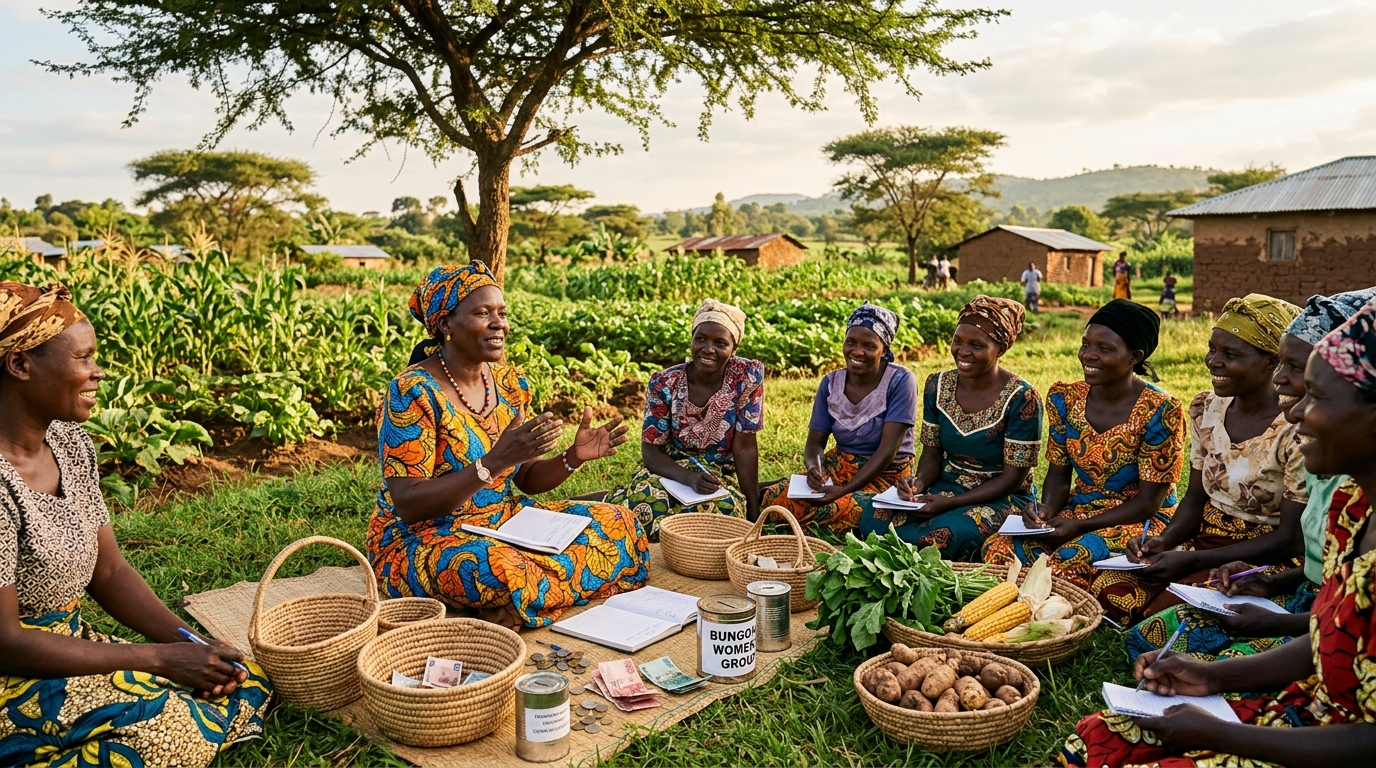
In the heart of Bungoma, Kenya, lives Matilda, a woman whose life mirrors the experience of millions of African women. She is a market trader, a mother of five, and a farmer working on just half a hectare of land. Without formal literacy, she has built extraordinary resourcefulness. She embodies resilience and understated determination in the face of poverty and hardship.
Matilda's daily reality is a struggle for survival. Her small plot cannot provide food security, so farming is only one part of her livelihood. To keep her children fed, she turns to a patchwork of small entrepreneurial ventures.
She brews chang'aa (a traditional distilled spirit) and busaa (a fermented millet or sorghum beer), sells paraffin, trades maize across the border, and works as farm labour for meagre returns. Despite her grit, she and her children often go hungry. There are days when the household survives on nothing but strong tea.
Her story highlights the disconnect between policy prescriptions and lived realities. Extension officers may advise fertilisers, companies may push improved seeds, and community organisations may demand fees for training. For Matilda, survival comes first. Hospital bills, school fees, and daily meals outweigh any investment in farming inputs.
As she once lamented, 'Five years ago we had a better life. I owned eight sheep. These were all sold to meet medical bills.'
Yet amid hardship, hope shines through. Matilda finds strength in her neighbourhood women's group, which runs a rotating savings and credit scheme. This grassroots initiative provides small but vital financial support, enabling her to sustain her family and maintain her dignity.
It is here, in the solidarity of women, that the seeds of transformation lie.
It is here, in the solidarity of women, that the seeds of transformation lie.
The future for Matilda, and countless women like her, depends on recognising and building upon these community led solutions. By supporting women's groups, facilitating business plans, and providing microloans, policymakers and financiers can empower women to turn their resilience into sustainable livelihoods.
With access to markets, training, and modest capital, Matilda could transform her small farm into a source of organic produce. This would contribute to both her family's wellbeing and Africa's broader economic renewal.
Matilda's journey is not one of despair but of potential. She symbolises the untapped strength of African women: farmers, entrepreneurs, mothers, and community leaders. With the right support, she can move from survival to sustainability, from struggle to empowerment.
Her story is a call to action: to invest in women, to lighten their burdens, and to unlock their capacity to lead Africa towards regenerative futures.